
This Week’s E-Bike News Headlines
The Iconic Electric Bike Company Files Bankruptcy

The Newport Beach, California-based Electric Bike Company (EBC) has filed bankruptcy following a gradual decline over the course of this year. The company previously had two production facilities, including a showroom/assembly facility and a separate paint shop, but recently downsized to a single location.
EBC seemingly started the year strong after announcing a potential collaboration with Pedego last autumn. In February, the company formed a partnership with Integral Electrics, a female-led and focused maker of cargo e-bikes.
More recently, Electric Bike Company launched a funding campaign through StartEngine.com, allowing investors to buy in and own a share of the company. When it closed, 94 backers had invested $171,400.
As of the beginning of this week, the company’s e-bikes were all listed as out of stock on its website. Its social media channels had either shut down or transitioned to a resource hub for e-bike information and safety.
Reddit user marke1234 shared Electric Bike Company’s bankruptcy filing, which was posted on Friday, 10/3. Another user, claiming to be a former employee of the company, posted a few months prior to the filing about the company’s recent financial and supply chain issues.
Our Take: The shutdown of any e-bike brand is a blow to the industry, but few are/were as iconic as Electric Bike Company. Not only were its e-bikes recognizable at a glance, but buyers of EBC’s models could choose from a nearly unheard-of number of customization options. We often praised the brand for offering custom color and component selections for most of its bikes major elements.
It is possible that the instability from this year’s seemingly constant tariff fluctuations was a contributing factor to EBC’s closure. While the company proudly painted and assembled its e-bikes domestically, many of the components it used were still imported. We saw its prices rise (just as those of many other brands have) over the course of 2025.
Considering Electric Bike Company’s nature, we wouldn’t be surprised if it was purchased and later revived. While this is only one possibility, it would be interesting to see how much e-bike customization is offered in the future, as the more unique color/component options buyers choose, the higher the cost of production and assembly becomes.
BatteryIQ Reaches Funding Target, Allowing Realization of New BMS Tech
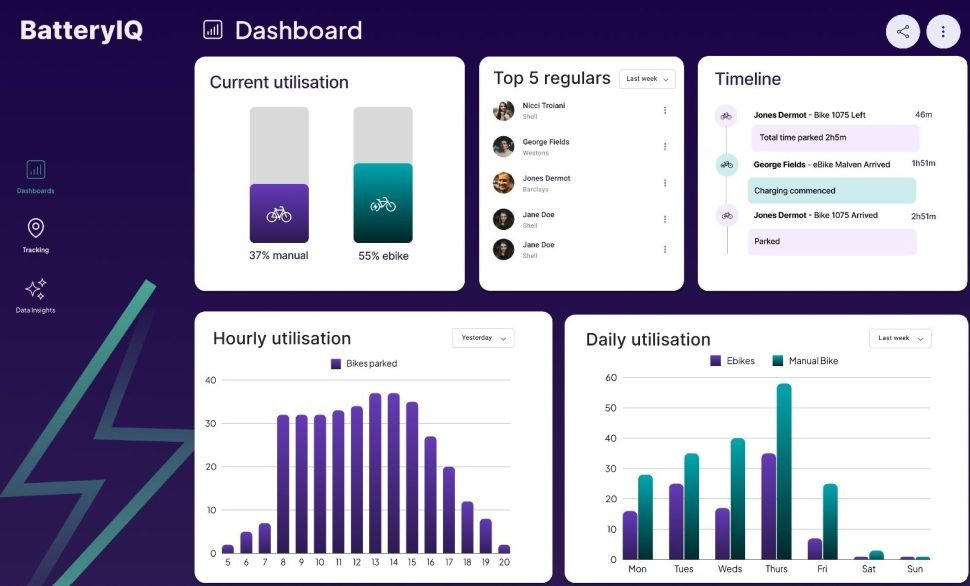
Image Source: Cycling Electric
As a branch-off from Boost Bikes, BatteryIQ used its experience making conversion kits to develop a BMS software that can monitor all of an e-bike battery pack’s cells. The system can then send users notifications if cell conditions become concerning. The monitoring data and alerts can be read on a software dashboard by “any interested party.”
BatteryIQ’s software “works across a multitude of metrics, the chipset being able to detect increased humidity, among other suspicious cell behaviours, yet likely in advance of major issues. The AI-driven algorithm also live records the voltage of every cell in a battery, plus the temperature.” The system can then sound the alarm if unsafe conditions arise.
The software might be of particular interest to landlords and property managers who currently prohibit the use and storage of e-bikes on their property following the media’s overblown coverage of lithium-ion battery fires. It may also be useful to businesses that use or sell e-bikes which have lost insurance coverage due to the perceived flammability risk.
Having reached a new funding goal, BatteryIQ aims to produce a chip that could be integrated into BMS software by battery pack manufacturers. The company’s website suggests that its technology is ideal for rental fleets of EVs. Its founder, Nick Bailey, also says that the software has aerospace applications, inviting collaboration with companies in that sector.
Our Take: While the lithium-ion batteries used by e-bikes are generally safe, there is no doubt that the public’s perception of their risks has been influenced by regular media reports of battery fires. With this in mind, BatteryIQ’s technology seems promising, groundbreaking, and potentially extremely useful.
We support any means of encouraging and enhancing e-bike safety. Considering that this new technology has the potential to reshape the public perception of lithium-ion batteries, we hope that it proves effective at mitigating potential risks. If so, we’d like to see it become widely implemented.
Urban Arrow Releases the Breeze Longtail Cargo E-Bike
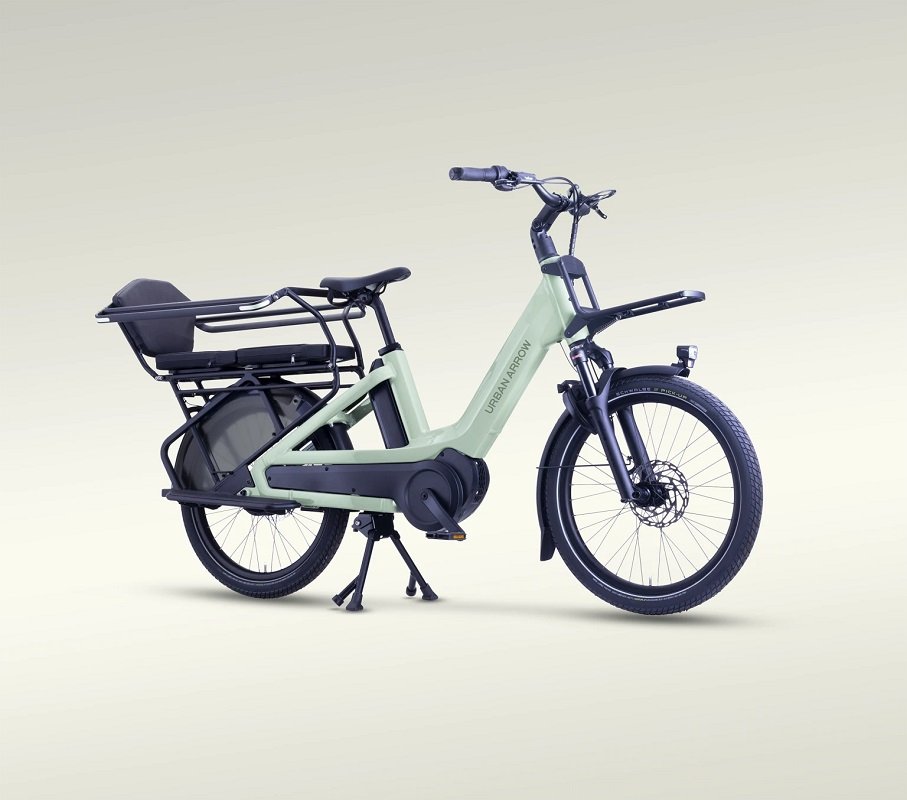
The bike rolls on 26” wheels and is sized more like an urban commuter with a standard wheelbase than many of Urban Arrow’s extended front-loaders. It is equipped with a Bosch Cargo Line mid-drive powered by one of three battery capacity options: a 400, 545, or 800-Wh power pack.
It can carry a total payload of 440 lbs (200 kg) and is equipped with an MIK-compatible cargo rack that is large enough for up to two child seats. It can be outfitted with a range of optional accessories, including a handrail, seat pads, footboards, small or large panniers, etc.
The Breeze also comes with a front cargo rack, an integrated light system, a Suntour Mobie 34 suspension fork, a front cafe wheel lock, and more. Its base price is €5,499 in Europe, which translates to around $6440, though the bike isn’t currently available in North America.
Our Take: While the Breeze isn’t Urban Arrow’s most affordable model (that title belongs to the aptly-named Shorty), it finds itself roughly in the middle of the company’s lineup in terms of cost. As a longtail cargo e-bike, it offers tons of versatility and is likely to ride more predictably for traditional cyclists than a front-loading cargo e-bike.
What can we say? It’s well-equipped, it looks great, and it offers a variety of range options for riders of different needs and budget levels. For those who want a premium-tier cargo e-bike that feels like a “regular” bike, we expect the Breeze will be a hit.
